
Search results for: 'Nails for face nailing pine floors'
-
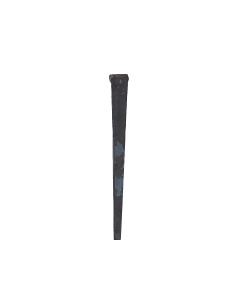 Flooring Nail
Flooring Nails are recommended for laying tongue and groove hardwood flooring.
Do not use this nail for face-nailing softwood flooring because the head is too small. Available Hardened in Standard Finish or Hot-Dip Galvanized.
All our nails are made on original 19th century and early 20th century nail machines, this may lead to variation in head shape and slight differences in nail length. Tremont nails are proudly manufactured and packaged in Mansfield Massachusetts.
Blind Nailing
Nailing at a 45 degree angle from the butt-end of the board, which may be flat-surface, ship-lap, or tongue-and-groove. Nails used in this fashion usually have small heads and are not visible when the installation is completed. Also called toe-nailing, the sole purpose of nailing in this manner is functional rather then aesthetic.
Determine the nail spacing requirements for your hardwood flooring, based on the width of the floorboards. Boards 2 to 2 3/4 inches wide need one nail every 8 to 10 inches. Boards 3 to 3 3/4 inches wide require a nail every 6 to 8 inches. Boards 4 to 7 inches wide need one nail every 6 inches
Cut nails posses great durability. They are hard to pull out because the shape causes the wood fibers to push downward and wedge against the nails, greatly strengthening the holding power. Once you have used them you will prefer to use them for all of you projects.
As low as $13.00 -
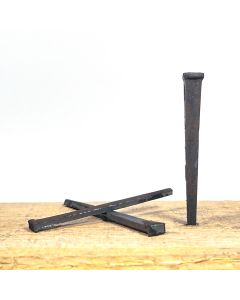 Flooring Nail-2" 6d-Hardened-1 Pound
Flooring Nails are recommended for laying tongue and groove hardwood flooring. Do not use this nail for face-nailing softwood flooring because the head is too small. Available Hardened in Standard Finish or Hot-Dip Galvanized. All our nails are made on original 19th century and early 20th century nail machines, this may lead to variation in head shape and slight differences in nail length. Tremont nails are proudly manufactured and packaged in Mansfield Massachusetts.
Blind Nailing
Nailing at a 45 degree angle from the butt-end of the board, which may be flat-surface, ship-lap, or tongue-and-groove. Nails used in this fashion usually have small heads and are not visible when the installation is completed. Also called toe-nailing, the sole purpose of nailing in this manner is functional rather then aesthetic.
Determine the nail spacing requirements for your hardwood flooring, based on the width of the floorboards. Boards 2 to 2 3/4 inches wide need one nail every 8 to 10 inches. Boards 3 to 3 3/4 inches wide require a nail every 6 to 8 inches. Boards 4 to 7 inches wide need one nail every 6 inches
Cut nails posses great durability. They are hard to pull out because the shape causes the wood fibers to push downward and wedge against the nails, greatly strengthening the holding power. Once you have used them you will prefer to use them for all of you projects.
$13.00Out of stock -
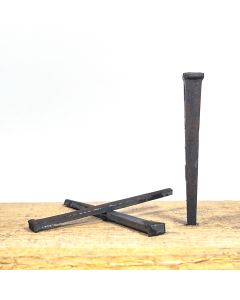 Flooring Nail-2" 6d-Hardened-5 Pound
Flooring Nails are recommended for laying tongue and groove hardwood flooring. Do not use this nail for face-nailing softwood flooring because the head is too small. Available Hardened in Standard Finish or Hot-Dip Galvanized. All our nails are made on original 19th century and early 20th century nail machines, this may lead to variation in head shape and slight differences in nail length. Tremont nails are proudly manufactured and packaged in Mansfield Massachusetts.
Blind Nailing
Nailing at a 45 degree angle from the butt-end of the board, which may be flat-surface, ship-lap, or tongue-and-groove. Nails used in this fashion usually have small heads and are not visible when the installation is completed. Also called toe-nailing, the sole purpose of nailing in this manner is functional rather then aesthetic.
Determine the nail spacing requirements for your hardwood flooring, based on the width of the floorboards. Boards 2 to 2 3/4 inches wide need one nail every 8 to 10 inches. Boards 3 to 3 3/4 inches wide require a nail every 6 to 8 inches. Boards 4 to 7 inches wide need one nail every 6 inches
Cut nails posses great durability. They are hard to pull out because the shape causes the wood fibers to push downward and wedge against the nails, greatly strengthening the holding power. Once you have used them you will prefer to use them for all of you projects.
$49.00Out of stock -
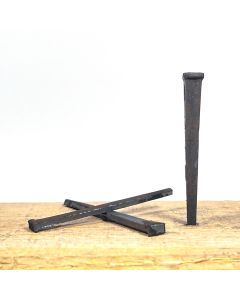 Flooring Nail-2" 6d-Hardened-50 Pound
Flooring Nails are recommended for laying tongue and groove hardwood flooring. Do not use this nail for face-nailing softwood flooring because the head is too small. Available Hardened in Standard Finish or Hot-Dip Galvanized. All our nails are made on original 19th century and early 20th century nail machines, this may lead to variation in head shape and slight differences in nail length. Tremont nails are proudly manufactured and packaged in Mansfield Massachusetts.
Blind Nailing
Nailing at a 45 degree angle from the butt-end of the board, which may be flat-surface, ship-lap, or tongue-and-groove. Nails used in this fashion usually have small heads and are not visible when the installation is completed. Also called toe-nailing, the sole purpose of nailing in this manner is functional rather then aesthetic.
Determine the nail spacing requirements for your hardwood flooring, based on the width of the floorboards. Boards 2 to 2 3/4 inches wide need one nail every 8 to 10 inches. Boards 3 to 3 3/4 inches wide require a nail every 6 to 8 inches. Boards 4 to 7 inches wide need one nail every 6 inches
Cut nails posses great durability. They are hard to pull out because the shape causes the wood fibers to push downward and wedge against the nails, greatly strengthening the holding power. Once you have used them you will prefer to use them for all of you projects.
$297.00Out of stock -
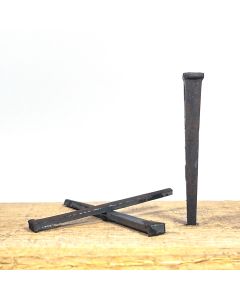 Flooring Nail-3" 10d-Hardened-1 Pound
Flooring Nails are recommended for laying tongue and groove hardwood flooring. Do not use this nail for face-nailing softwood flooring because the head is too small. Available Hardened in Standard Finish or Hot-Dip Galvanized. All our nails are made on original 19th century and early 20th century nail machines, this may lead to variation in head shape and slight differences in nail length. Tremont nails are proudly manufactured and packaged in Mansfield Massachusetts.
Blind Nailing
Nailing at a 45 degree angle from the butt-end of the board, which may be flat-surface, ship-lap, or tongue-and-groove. Nails used in this fashion usually have small heads and are not visible when the installation is completed. Also called toe-nailing, the sole purpose of nailing in this manner is functional rather then aesthetic.
Determine the nail spacing requirements for your hardwood flooring, based on the width of the floorboards. Boards 2 to 2 3/4 inches wide need one nail every 8 to 10 inches. Boards 3 to 3 3/4 inches wide require a nail every 6 to 8 inches. Boards 4 to 7 inches wide need one nail every 6 inches
Cut nails posses great durability. They are hard to pull out because the shape causes the wood fibers to push downward and wedge against the nails, greatly strengthening the holding power. Once you have used them you will prefer to use them for all of you projects.
$13.00 -
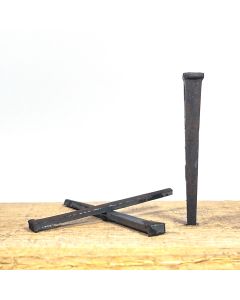 Flooring Nail-3" 10d-Hardened-5 Pound
Flooring Nails are recommended for laying tongue and groove hardwood flooring. Do not use this nail for face-nailing softwood flooring because the head is too small. Available Hardened in Standard Finish or Hot-Dip Galvanized. All our nails are made on original 19th century and early 20th century nail machines, this may lead to variation in head shape and slight differences in nail length. Tremont nails are proudly manufactured and packaged in Mansfield Massachusetts.
Blind Nailing
Nailing at a 45 degree angle from the butt-end of the board, which may be flat-surface, ship-lap, or tongue-and-groove. Nails used in this fashion usually have small heads and are not visible when the installation is completed. Also called toe-nailing, the sole purpose of nailing in this manner is functional rather then aesthetic.
Determine the nail spacing requirements for your hardwood flooring, based on the width of the floorboards. Boards 2 to 2 3/4 inches wide need one nail every 8 to 10 inches. Boards 3 to 3 3/4 inches wide require a nail every 6 to 8 inches. Boards 4 to 7 inches wide need one nail every 6 inches
Cut nails posses great durability. They are hard to pull out because the shape causes the wood fibers to push downward and wedge against the nails, greatly strengthening the holding power. Once you have used them you will prefer to use them for all of you projects.
$49.00 -
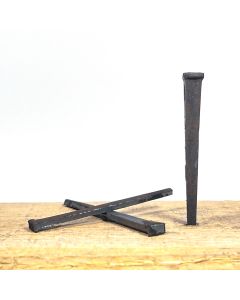 Flooring Nail-3" 10d-Hardened-50 Pound
Flooring Nails are recommended for laying tongue and groove hardwood flooring. Do not use this nail for face-nailing softwood flooring because the head is too small. Available Hardened in Standard Finish or Hot-Dip Galvanized. All our nails are made on original 19th century and early 20th century nail machines, this may lead to variation in head shape and slight differences in nail length. Tremont nails are proudly manufactured and packaged in Mansfield Massachusetts.
Blind Nailing
Nailing at a 45 degree angle from the butt-end of the board, which may be flat-surface, ship-lap, or tongue-and-groove. Nails used in this fashion usually have small heads and are not visible when the installation is completed. Also called toe-nailing, the sole purpose of nailing in this manner is functional rather then aesthetic.
Determine the nail spacing requirements for your hardwood flooring, based on the width of the floorboards. Boards 2 to 2 3/4 inches wide need one nail every 8 to 10 inches. Boards 3 to 3 3/4 inches wide require a nail every 6 to 8 inches. Boards 4 to 7 inches wide need one nail every 6 inches
Cut nails posses great durability. They are hard to pull out because the shape causes the wood fibers to push downward and wedge against the nails, greatly strengthening the holding power. Once you have used them you will prefer to use them for all of you projects.
$294.00 -
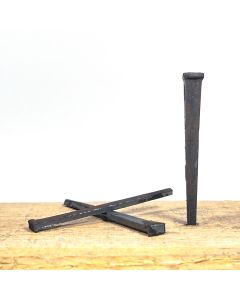 Flooring Nail-1-1/4" 3d-Hardened-1 Pound
Flooring Nails are recommended for laying tongue and groove hardwood flooring. Do not use this nail for face-nailing softwood flooring because the head is too small. Available Hardened in Standard Finish or Hot-Dip Galvanized. All our nails are made on original 19th century and early 20th century nail machines, this may lead to variation in head shape and slight differences in nail length. Tremont nails are proudly manufactured and packaged in Mansfield Massachusetts.
Blind Nailing
Nailing at a 45 degree angle from the butt-end of the board, which may be flat-surface, ship-lap, or tongue-and-groove. Nails used in this fashion usually have small heads and are not visible when the installation is completed. Also called toe-nailing, the sole purpose of nailing in this manner is functional rather then aesthetic.
Determine the nail spacing requirements for your hardwood flooring, based on the width of the floorboards. Boards 2 to 2 3/4 inches wide need one nail every 8 to 10 inches. Boards 3 to 3 3/4 inches wide require a nail every 6 to 8 inches. Boards 4 to 7 inches wide need one nail every 6 inches
Cut nails posses great durability. They are hard to pull out because the shape causes the wood fibers to push downward and wedge against the nails, greatly strengthening the holding power. Once you have used them you will prefer to use them for all of you projects.
$12.00Out of stock -
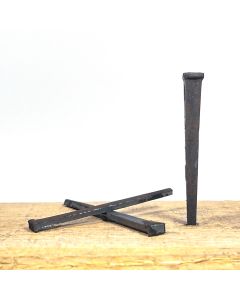 Flooring Nail-1-1/4" 3d-Hardened-5 Pound
Flooring Nails are recommended for laying tongue and groove hardwood flooring. Do not use this nail for face-nailing softwood flooring because the head is too small. Available Hardened in Standard Finish or Hot-Dip Galvanized. All our nails are made on original 19th century and early 20th century nail machines, this may lead to variation in head shape and slight differences in nail length. Tremont nails are proudly manufactured and packaged in Mansfield Massachusetts.
Blind Nailing
Nailing at a 45 degree angle from the butt-end of the board, which may be flat-surface, ship-lap, or tongue-and-groove. Nails used in this fashion usually have small heads and are not visible when the installation is completed. Also called toe-nailing, the sole purpose of nailing in this manner is functional rather then aesthetic.
Determine the nail spacing requirements for your hardwood flooring, based on the width of the floorboards. Boards 2 to 2 3/4 inches wide need one nail every 8 to 10 inches. Boards 3 to 3 3/4 inches wide require a nail every 6 to 8 inches. Boards 4 to 7 inches wide need one nail every 6 inches
Cut nails posses great durability. They are hard to pull out because the shape causes the wood fibers to push downward and wedge against the nails, greatly strengthening the holding power. Once you have used them you will prefer to use them for all of you projects.
$46.00 -
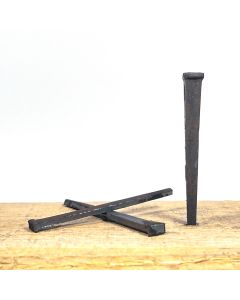 Flooring Nail-1-1/4" 3d-Hardened-50 Pound
Flooring Nails are recommended for laying tongue and groove hardwood flooring. Do not use this nail for face-nailing softwood flooring because the head is too small. Available Hardened in Standard Finish or Hot-Dip Galvanized. All our nails are made on original 19th century and early 20th century nail machines, this may lead to variation in head shape and slight differences in nail length. Tremont nails are proudly manufactured and packaged in Mansfield Massachusetts.
Blind Nailing
Nailing at a 45 degree angle from the butt-end of the board, which may be flat-surface, ship-lap, or tongue-and-groove. Nails used in this fashion usually have small heads and are not visible when the installation is completed. Also called toe-nailing, the sole purpose of nailing in this manner is functional rather then aesthetic.
Determine the nail spacing requirements for your hardwood flooring, based on the width of the floorboards. Boards 2 to 2 3/4 inches wide need one nail every 8 to 10 inches. Boards 3 to 3 3/4 inches wide require a nail every 6 to 8 inches. Boards 4 to 7 inches wide need one nail every 6 inches
Cut nails posses great durability. They are hard to pull out because the shape causes the wood fibers to push downward and wedge against the nails, greatly strengthening the holding power. Once you have used them you will prefer to use them for all of you projects.
$278.00 -
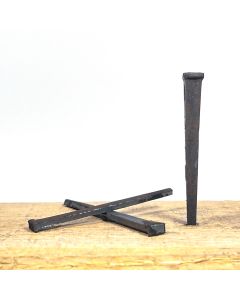 Flooring Nail-1-1/2" 4d-Hardened-1 Pound
Flooring Nails are recommended for laying tongue and groove hardwood flooring. Do not use this nail for face-nailing softwood flooring because the head is too small. Available Hardened in Standard Finish or Hot-Dip Galvanized. All our nails are made on original 19th century and early 20th century nail machines, this may lead to variation in head shape and slight differences in nail length. Tremont nails are proudly manufactured and packaged in Mansfield Massachusetts.
Blind Nailing
Nailing at a 45 degree angle from the butt-end of the board, which may be flat-surface, ship-lap, or tongue-and-groove. Nails used in this fashion usually have small heads and are not visible when the installation is completed. Also called toe-nailing, the sole purpose of nailing in this manner is functional rather then aesthetic.
Determine the nail spacing requirements for your hardwood flooring, based on the width of the floorboards. Boards 2 to 2 3/4 inches wide need one nail every 8 to 10 inches. Boards 3 to 3 3/4 inches wide require a nail every 6 to 8 inches. Boards 4 to 7 inches wide need one nail every 6 inches
Cut nails posses great durability. They are hard to pull out because the shape causes the wood fibers to push downward and wedge against the nails, greatly strengthening the holding power. Once you have used them you will prefer to use them for all of you projects.
$13.00 -
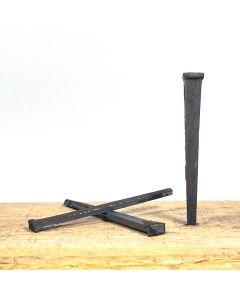 Flooring Nail-1-1/2" 4d-Hardened-5 Pound
Flooring Nails are recommended for laying tongue and groove hardwood flooring. Do not use this nail for face-nailing softwood flooring because the head is too small. Available Hardened in Standard Finish or Hot-Dip Galvanized. All our nails are made on original 19th century and early 20th century nail machines, this may lead to variation in head shape and slight differences in nail length. Tremont nails are proudly manufactured and packaged in Mansfield Massachusetts.
Blind Nailing
Nailing at a 45 degree angle from the butt-end of the board, which may be flat-surface, ship-lap, or tongue-and-groove. Nails used in this fashion usually have small heads and are not visible when the installation is completed. Also called toe-nailing, the sole purpose of nailing in this manner is functional rather then aesthetic.
Determine the nail spacing requirements for your hardwood flooring, based on the width of the floorboards. Boards 2 to 2 3/4 inches wide need one nail every 8 to 10 inches. Boards 3 to 3 3/4 inches wide require a nail every 6 to 8 inches. Boards 4 to 7 inches wide need one nail every 6 inches
Cut nails posses great durability. They are hard to pull out because the shape causes the wood fibers to push downward and wedge against the nails, greatly strengthening the holding power. Once you have used them you will prefer to use them for all of you projects.
$50.00Out of stock -
 Flooring Nail-1-1/2" 4d-Hardened-50 Pound
Flooring Nails are recommended for laying tongue and groove hardwood flooring. Do not use this nail for face-nailing softwood flooring because the head is too small. Available Hardened in Standard Finish or Hot-Dip Galvanized. All our nails are made on original 19th century and early 20th century nail machines, this may lead to variation in head shape and slight differences in nail length. Tremont nails are proudly manufactured and packaged in Mansfield Massachusetts.
Blind Nailing
Nailing at a 45 degree angle from the butt-end of the board, which may be flat-surface, ship-lap, or tongue-and-groove. Nails used in this fashion usually have small heads and are not visible when the installation is completed. Also called toe-nailing, the sole purpose of nailing in this manner is functional rather then aesthetic.
Determine the nail spacing requirements for your hardwood flooring, based on the width of the floorboards. Boards 2 to 2 3/4 inches wide need one nail every 8 to 10 inches. Boards 3 to 3 3/4 inches wide require a nail every 6 to 8 inches. Boards 4 to 7 inches wide need one nail every 6 inches
Cut nails posses great durability. They are hard to pull out because the shape causes the wood fibers to push downward and wedge against the nails, greatly strengthening the holding power. Once you have used them you will prefer to use them for all of you projects.
$300.00 -
 Flooring Nail-2" 6d-Hot-Dip Galvanized-1 Pound
Flooring Nails are recommended for laying tongue and groove hardwood flooring. Do not use this nail for face-nailing softwood flooring because the head is too small. Available Hardened in Standard Finish or Hot-Dip Galvanized. All our nails are made on original 19th century and early 20th century nail machines, this may lead to variation in head shape and slight differences in nail length. Tremont nails are proudly manufactured and packaged in Mansfield Massachusetts.
Blind Nailing
Nailing at a 45 degree angle from the butt-end of the board, which may be flat-surface, ship-lap, or tongue-and-groove. Nails used in this fashion usually have small heads and are not visible when the installation is completed. Also called toe-nailing, the sole purpose of nailing in this manner is functional rather then aesthetic.
Determine the nail spacing requirements for your hardwood flooring, based on the width of the floorboards. Boards 2 to 2 3/4 inches wide need one nail every 8 to 10 inches. Boards 3 to 3 3/4 inches wide require a nail every 6 to 8 inches. Boards 4 to 7 inches wide need one nail every 6 inches
Cut nails posses great durability. They are hard to pull out because the shape causes the wood fibers to push downward and wedge against the nails, greatly strengthening the holding power. Once you have used them you will prefer to use them for all of you projects.
$14.49 -
 Flooring Nail-2" 6d-Hot-Dip Galvanized-5 Pound
Flooring Nails are recommended for laying tongue and groove hardwood flooring. Do not use this nail for face-nailing softwood flooring because the head is too small. Available Hardened in Standard Finish or Hot-Dip Galvanized. All our nails are made on original 19th century and early 20th century nail machines, this may lead to variation in head shape and slight differences in nail length. Tremont nails are proudly manufactured and packaged in Mansfield Massachusetts.
Blind Nailing
Nailing at a 45 degree angle from the butt-end of the board, which may be flat-surface, ship-lap, or tongue-and-groove. Nails used in this fashion usually have small heads and are not visible when the installation is completed. Also called toe-nailing, the sole purpose of nailing in this manner is functional rather then aesthetic.
Determine the nail spacing requirements for your hardwood flooring, based on the width of the floorboards. Boards 2 to 2 3/4 inches wide need one nail every 8 to 10 inches. Boards 3 to 3 3/4 inches wide require a nail every 6 to 8 inches. Boards 4 to 7 inches wide need one nail every 6 inches
Cut nails posses great durability. They are hard to pull out because the shape causes the wood fibers to push downward and wedge against the nails, greatly strengthening the holding power. Once you have used them you will prefer to use them for all of you projects.
$57.75 -
 Flooring Nail-2" 6d-Hot-Dip Galvanized-50 Pound
Flooring Nails are recommended for laying tongue and groove hardwood flooring. Do not use this nail for face-nailing softwood flooring because the head is too small. Available Hardened in Standard Finish or Hot-Dip Galvanized. All our nails are made on original 19th century and early 20th century nail machines, this may lead to variation in head shape and slight differences in nail length. Tremont nails are proudly manufactured and packaged in Mansfield Massachusetts.
Blind Nailing
Nailing at a 45 degree angle from the butt-end of the board, which may be flat-surface, ship-lap, or tongue-and-groove. Nails used in this fashion usually have small heads and are not visible when the installation is completed. Also called toe-nailing, the sole purpose of nailing in this manner is functional rather then aesthetic.
Determine the nail spacing requirements for your hardwood flooring, based on the width of the floorboards. Boards 2 to 2 3/4 inches wide need one nail every 8 to 10 inches. Boards 3 to 3 3/4 inches wide require a nail every 6 to 8 inches. Boards 4 to 7 inches wide need one nail every 6 inches
Cut nails posses great durability. They are hard to pull out because the shape causes the wood fibers to push downward and wedge against the nails, greatly strengthening the holding power. Once you have used them you will prefer to use them for all of you projects.
$355.47 -
 Flooring Nail-2-1/4" 7d-Hardened-1 Pound
Flooring Nails are recommended for laying tongue and groove hardwood flooring. Do not use this nail for face-nailing softwood flooring because the head is too small. Available Hardened in Standard Finish or Hot-Dip Galvanized. All our nails are made on original 19th century and early 20th century nail machines, this may lead to variation in head shape and slight differences in nail length. Tremont nails are proudly manufactured and packaged in Mansfield Massachusetts.
Blind Nailing
Nailing at a 45 degree angle from the butt-end of the board, which may be flat-surface, ship-lap, or tongue-and-groove. Nails used in this fashion usually have small heads and are not visible when the installation is completed. Also called toe-nailing, the sole purpose of nailing in this manner is functional rather then aesthetic.
Determine the nail spacing requirements for your hardwood flooring, based on the width of the floorboards. Boards 2 to 2 3/4 inches wide need one nail every 8 to 10 inches. Boards 3 to 3 3/4 inches wide require a nail every 6 to 8 inches. Boards 4 to 7 inches wide need one nail every 6 inches
Cut nails posses great durability. They are hard to pull out because the shape causes the wood fibers to push downward and wedge against the nails, greatly strengthening the holding power. Once you have used them you will prefer to use them for all of you projects.
$13.00 -
 Flooring Nail-2-1/4" 7d-Hardened-5 Pound
Flooring Nails are recommended for laying tongue and groove hardwood flooring. Do not use this nail for face-nailing softwood flooring because the head is too small. Available Hardened in Standard Finish or Hot-Dip Galvanized. All our nails are made on original 19th century and early 20th century nail machines, this may lead to variation in head shape and slight differences in nail length. Tremont nails are proudly manufactured and packaged in Mansfield Massachusetts.
Blind Nailing
Nailing at a 45 degree angle from the butt-end of the board, which may be flat-surface, ship-lap, or tongue-and-groove. Nails used in this fashion usually have small heads and are not visible when the installation is completed. Also called toe-nailing, the sole purpose of nailing in this manner is functional rather then aesthetic.
Determine the nail spacing requirements for your hardwood flooring, based on the width of the floorboards. Boards 2 to 2 3/4 inches wide need one nail every 8 to 10 inches. Boards 3 to 3 3/4 inches wide require a nail every 6 to 8 inches. Boards 4 to 7 inches wide need one nail every 6 inches
Cut nails posses great durability. They are hard to pull out because the shape causes the wood fibers to push downward and wedge against the nails, greatly strengthening the holding power. Once you have used them you will prefer to use them for all of you projects.
$49.00Out of stock -
 Flooring Nail-2-1/4" 7d-Hardened-50 Pound
Flooring Nails are recommended for laying tongue and groove hardwood flooring. Do not use this nail for face-nailing softwood flooring because the head is too small. Available Hardened in Standard Finish or Hot-Dip Galvanized. All our nails are made on original 19th century and early 20th century nail machines, this may lead to variation in head shape and slight differences in nail length. Tremont nails are proudly manufactured and packaged in Mansfield Massachusetts.
Blind Nailing
Nailing at a 45 degree angle from the butt-end of the board, which may be flat-surface, ship-lap, or tongue-and-groove. Nails used in this fashion usually have small heads and are not visible when the installation is completed. Also called toe-nailing, the sole purpose of nailing in this manner is functional rather then aesthetic.
Determine the nail spacing requirements for your hardwood flooring, based on the width of the floorboards. Boards 2 to 2 3/4 inches wide need one nail every 8 to 10 inches. Boards 3 to 3 3/4 inches wide require a nail every 6 to 8 inches. Boards 4 to 7 inches wide need one nail every 6 inches
Cut nails posses great durability. They are hard to pull out because the shape causes the wood fibers to push downward and wedge against the nails, greatly strengthening the holding power. Once you have used them you will prefer to use them for all of you projects.
$297.00Out of stock -
 Flooring Nail-2-1/2" 8d-Hardened-1 Pound
Flooring Nails are recommended for laying tongue and groove hardwood flooring. Do not use this nail for face-nailing softwood flooring because the head is too small. Available Hardened in Standard Finish or Hot-Dip Galvanized. All our nails are made on original 19th century and early 20th century nail machines, this may lead to variation in head shape and slight differences in nail length. Tremont nails are proudly manufactured and packaged in Mansfield Massachusetts.
Blind Nailing
Nailing at a 45 degree angle from the butt-end of the board, which may be flat-surface, ship-lap, or tongue-and-groove. Nails used in this fashion usually have small heads and are not visible when the installation is completed. Also called toe-nailing, the sole purpose of nailing in this manner is functional rather then aesthetic.
Determine the nail spacing requirements for your hardwood flooring, based on the width of the floorboards. Boards 2 to 2 3/4 inches wide need one nail every 8 to 10 inches. Boards 3 to 3 3/4 inches wide require a nail every 6 to 8 inches. Boards 4 to 7 inches wide need one nail every 6 inches
Cut nails posses great durability. They are hard to pull out because the shape causes the wood fibers to push downward and wedge against the nails, greatly strengthening the holding power. Once you have used them you will prefer to use them for all of you projects.
$13.00 -
 Flooring Nail-2-1/2" 8d-Hardened-5 Pound
Flooring Nails are recommended for laying tongue and groove hardwood flooring. Do not use this nail for face-nailing softwood flooring because the head is too small. Available Hardened in Standard Finish or Hot-Dip Galvanized. All our nails are made on original 19th century and early 20th century nail machines, this may lead to variation in head shape and slight differences in nail length. Tremont nails are proudly manufactured and packaged in Mansfield Massachusetts.
Blind Nailing
Nailing at a 45 degree angle from the butt-end of the board, which may be flat-surface, ship-lap, or tongue-and-groove. Nails used in this fashion usually have small heads and are not visible when the installation is completed. Also called toe-nailing, the sole purpose of nailing in this manner is functional rather then aesthetic.
Determine the nail spacing requirements for your hardwood flooring, based on the width of the floorboards. Boards 2 to 2 3/4 inches wide need one nail every 8 to 10 inches. Boards 3 to 3 3/4 inches wide require a nail every 6 to 8 inches. Boards 4 to 7 inches wide need one nail every 6 inches
Cut nails posses great durability. They are hard to pull out because the shape causes the wood fibers to push downward and wedge against the nails, greatly strengthening the holding power. Once you have used them you will prefer to use them for all of you projects.
$49.00Out of stock -
 Flooring Nail-2-1/2" 8d-Hardened-50 Pound
Flooring Nails are recommended for laying tongue and groove hardwood flooring. Do not use this nail for face-nailing softwood flooring because the head is too small. Available Hardened in Standard Finish or Hot-Dip Galvanized. All our nails are made on original 19th century and early 20th century nail machines, this may lead to variation in head shape and slight differences in nail length. Tremont nails are proudly manufactured and packaged in Mansfield Massachusetts.
Blind Nailing
Nailing at a 45 degree angle from the butt-end of the board, which may be flat-surface, ship-lap, or tongue-and-groove. Nails used in this fashion usually have small heads and are not visible when the installation is completed. Also called toe-nailing, the sole purpose of nailing in this manner is functional rather then aesthetic.
Determine the nail spacing requirements for your hardwood flooring, based on the width of the floorboards. Boards 2 to 2 3/4 inches wide need one nail every 8 to 10 inches. Boards 3 to 3 3/4 inches wide require a nail every 6 to 8 inches. Boards 4 to 7 inches wide need one nail every 6 inches
Cut nails posses great durability. They are hard to pull out because the shape causes the wood fibers to push downward and wedge against the nails, greatly strengthening the holding power. Once you have used them you will prefer to use them for all of you projects.
$294.00 -
 Flooring Nail-3" 10d-Hot-Dip Galvanized-1 Pound
Flooring Nails are recommended for laying tongue and groove hardwood flooring. Do not use this nail for face-nailing softwood flooring because the head is too small. Available Hardened in Standard Finish or Hot-Dip Galvanized. All our nails are made on original 19th century and early 20th century nail machines, this may lead to variation in head shape and slight differences in nail length. Tremont nails are proudly manufactured and packaged in Mansfield Massachusetts.
Blind Nailing
Nailing at a 45 degree angle from the butt-end of the board, which may be flat-surface, ship-lap, or tongue-and-groove. Nails used in this fashion usually have small heads and are not visible when the installation is completed. Also called toe-nailing, the sole purpose of nailing in this manner is functional rather then aesthetic.
Determine the nail spacing requirements for your hardwood flooring, based on the width of the floorboards. Boards 2 to 2 3/4 inches wide need one nail every 8 to 10 inches. Boards 3 to 3 3/4 inches wide require a nail every 6 to 8 inches. Boards 4 to 7 inches wide need one nail every 6 inches
Cut nails posses great durability. They are hard to pull out because the shape causes the wood fibers to push downward and wedge against the nails, greatly strengthening the holding power. Once you have used them you will prefer to use them for all of you projects.
$14.13 -
 Flooring Nail-3" 10d-Hot-Dip Galvanized-5 Pound
Flooring Nails are recommended for laying tongue and groove hardwood flooring. Do not use this nail for face-nailing softwood flooring because the head is too small. Available Hardened in Standard Finish or Hot-Dip Galvanized. All our nails are made on original 19th century and early 20th century nail machines, this may lead to variation in head shape and slight differences in nail length. Tremont nails are proudly manufactured and packaged in Mansfield Massachusetts.
Blind Nailing
Nailing at a 45 degree angle from the butt-end of the board, which may be flat-surface, ship-lap, or tongue-and-groove. Nails used in this fashion usually have small heads and are not visible when the installation is completed. Also called toe-nailing, the sole purpose of nailing in this manner is functional rather then aesthetic.
Determine the nail spacing requirements for your hardwood flooring, based on the width of the floorboards. Boards 2 to 2 3/4 inches wide need one nail every 8 to 10 inches. Boards 3 to 3 3/4 inches wide require a nail every 6 to 8 inches. Boards 4 to 7 inches wide need one nail every 6 inches
Cut nails posses great durability. They are hard to pull out because the shape causes the wood fibers to push downward and wedge against the nails, greatly strengthening the holding power. Once you have used them you will prefer to use them for all of you projects.
$57.03 -
 Flooring Nail-3" 10d-Hot-Dip Galvanized-50 Pound
Flooring Nails are recommended for laying tongue and groove hardwood flooring. Do not use this nail for face-nailing softwood flooring because the head is too small. Available Hardened in Standard Finish or Hot-Dip Galvanized. All our nails are made on original 19th century and early 20th century nail machines, this may lead to variation in head shape and slight differences in nail length. Tremont nails are proudly manufactured and packaged in Mansfield Massachusetts.
Blind Nailing
Nailing at a 45 degree angle from the butt-end of the board, which may be flat-surface, ship-lap, or tongue-and-groove. Nails used in this fashion usually have small heads and are not visible when the installation is completed. Also called toe-nailing, the sole purpose of nailing in this manner is functional rather then aesthetic.
Determine the nail spacing requirements for your hardwood flooring, based on the width of the floorboards. Boards 2 to 2 3/4 inches wide need one nail every 8 to 10 inches. Boards 3 to 3 3/4 inches wide require a nail every 6 to 8 inches. Boards 4 to 7 inches wide need one nail every 6 inches
Cut nails posses great durability. They are hard to pull out because the shape causes the wood fibers to push downward and wedge against the nails, greatly strengthening the holding power. Once you have used them you will prefer to use them for all of you projects.
$352.61 -
 Flooring Nail-3-1/2" 16d-Hardened-1 Pound
Flooring Nails are recommended for laying tongue and groove hardwood flooring. Do not use this nail for face-nailing softwood flooring because the head is too small. Available Hardened in Standard Finish or Hot-Dip Galvanized. All our nails are made on original 19th century and early 20th century nail machines, this may lead to variation in head shape and slight differences in nail length. Tremont nails are proudly manufactured and packaged in Mansfield Massachusetts.
Blind Nailing
Nailing at a 45 degree angle from the butt-end of the board, which may be flat-surface, ship-lap, or tongue-and-groove. Nails used in this fashion usually have small heads and are not visible when the installation is completed. Also called toe-nailing, the sole purpose of nailing in this manner is functional rather then aesthetic.
Determine the nail spacing requirements for your hardwood flooring, based on the width of the floorboards. Boards 2 to 2 3/4 inches wide need one nail every 8 to 10 inches. Boards 3 to 3 3/4 inches wide require a nail every 6 to 8 inches. Boards 4 to 7 inches wide need one nail every 6 inches
Cut nails posses great durability. They are hard to pull out because the shape causes the wood fibers to push downward and wedge against the nails, greatly strengthening the holding power. Once you have used them you will prefer to use them for all of you projects.
$13.00 -
 Flooring Nail-3-1/2" 16d-Hardened-5 Pound
Flooring Nails are recommended for laying tongue and groove hardwood flooring. Do not use this nail for face-nailing softwood flooring because the head is too small. Available Hardened in Standard Finish or Hot-Dip Galvanized. All our nails are made on original 19th century and early 20th century nail machines, this may lead to variation in head shape and slight differences in nail length. Tremont nails are proudly manufactured and packaged in Mansfield Massachusetts.
Blind Nailing
Nailing at a 45 degree angle from the butt-end of the board, which may be flat-surface, ship-lap, or tongue-and-groove. Nails used in this fashion usually have small heads and are not visible when the installation is completed. Also called toe-nailing, the sole purpose of nailing in this manner is functional rather then aesthetic.
Determine the nail spacing requirements for your hardwood flooring, based on the width of the floorboards. Boards 2 to 2 3/4 inches wide need one nail every 8 to 10 inches. Boards 3 to 3 3/4 inches wide require a nail every 6 to 8 inches. Boards 4 to 7 inches wide need one nail every 6 inches
Cut nails posses great durability. They are hard to pull out because the shape causes the wood fibers to push downward and wedge against the nails, greatly strengthening the holding power. Once you have used them you will prefer to use them for all of you projects.
$48.00 -
 Flooring Nail-3-1/2" 16d-Hardened-50 Pound
Flooring Nails are recommended for laying tongue and groove hardwood flooring. Do not use this nail for face-nailing softwood flooring because the head is too small. Available Hardened in Standard Finish or Hot-Dip Galvanized. All our nails are made on original 19th century and early 20th century nail machines, this may lead to variation in head shape and slight differences in nail length. Tremont nails are proudly manufactured and packaged in Mansfield Massachusetts.
Blind Nailing
Nailing at a 45 degree angle from the butt-end of the board, which may be flat-surface, ship-lap, or tongue-and-groove. Nails used in this fashion usually have small heads and are not visible when the installation is completed. Also called toe-nailing, the sole purpose of nailing in this manner is functional rather then aesthetic.
Determine the nail spacing requirements for your hardwood flooring, based on the width of the floorboards. Boards 2 to 2 3/4 inches wide need one nail every 8 to 10 inches. Boards 3 to 3 3/4 inches wide require a nail every 6 to 8 inches. Boards 4 to 7 inches wide need one nail every 6 inches
Cut nails posses great durability. They are hard to pull out because the shape causes the wood fibers to push downward and wedge against the nails, greatly strengthening the holding power. Once you have used them you will prefer to use them for all of you projects.
$291.00 -
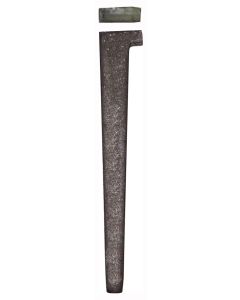 Glasgow Cut Floor Brad
The Glasgow Cut Floor Brad is traditionally used in the UK and Ireland for tongue and grooved floors. The head can easily be punched through the surface of the wood for a tight grip and the design of the nail prevents the wood from splitting. Glasgow Steel Nails were originally produced in Scotland until being purchased in 2013 by Tremont Nail Company. Please note that Glasgow Steel Nails are now sold by pound. Larger quantities by request only, please contact our sales team for prices and lead times.
Size in MM Brads per Pound 50 x 2.6 93 60 x 3 70 65 x 3.2 59 75 x 3.2 51 100 x 4 29 $10.00 -
 Flooring Nail-1-1/2" 4d-Hot-Dip Galvanized-1 Pound
Flooring Nails are recommended for laying tongue and groove hardwood flooring. Do not use this nail for face-nailing softwood flooring because the head is too small. Available Hardened in Standard Finish or Hot-Dip Galvanized. All our nails are made on original 19th century and early 20th century nail machines, this may lead to variation in head shape and slight differences in nail length. Tremont nails are proudly manufactured and packaged in Mansfield Massachusetts.
Blind Nailing
Nailing at a 45 degree angle from the butt-end of the board, which may be flat-surface, ship-lap, or tongue-and-groove. Nails used in this fashion usually have small heads and are not visible when the installation is completed. Also called toe-nailing, the sole purpose of nailing in this manner is functional rather then aesthetic.
Determine the nail spacing requirements for your hardwood flooring, based on the width of the floorboards. Boards 2 to 2 3/4 inches wide need one nail every 8 to 10 inches. Boards 3 to 3 3/4 inches wide require a nail every 6 to 8 inches. Boards 4 to 7 inches wide need one nail every 6 inches
Cut nails posses great durability. They are hard to pull out because the shape causes the wood fibers to push downward and wedge against the nails, greatly strengthening the holding power. Once you have used them you will prefer to use them for all of you projects.
$14.78 -
 Flooring Nail-1-1/2" 4d-Hot-Dip Galvanized-5 Pound
Flooring Nails are recommended for laying tongue and groove hardwood flooring. Do not use this nail for face-nailing softwood flooring because the head is too small. Available Hardened in Standard Finish or Hot-Dip Galvanized. All our nails are made on original 19th century and early 20th century nail machines, this may lead to variation in head shape and slight differences in nail length. Tremont nails are proudly manufactured and packaged in Mansfield Massachusetts.
Blind Nailing
Nailing at a 45 degree angle from the butt-end of the board, which may be flat-surface, ship-lap, or tongue-and-groove. Nails used in this fashion usually have small heads and are not visible when the installation is completed. Also called toe-nailing, the sole purpose of nailing in this manner is functional rather then aesthetic.
Determine the nail spacing requirements for your hardwood flooring, based on the width of the floorboards. Boards 2 to 2 3/4 inches wide need one nail every 8 to 10 inches. Boards 3 to 3 3/4 inches wide require a nail every 6 to 8 inches. Boards 4 to 7 inches wide need one nail every 6 inches
Cut nails posses great durability. They are hard to pull out because the shape causes the wood fibers to push downward and wedge against the nails, greatly strengthening the holding power. Once you have used them you will prefer to use them for all of you projects.
$58.60 -
 Flooring Nail-1-1/2" 4d-Hot-Dip Galvanized-50 Pound
Flooring Nails are recommended for laying tongue and groove hardwood flooring. Do not use this nail for face-nailing softwood flooring because the head is too small. Available Hardened in Standard Finish or Hot-Dip Galvanized. All our nails are made on original 19th century and early 20th century nail machines, this may lead to variation in head shape and slight differences in nail length. Tremont nails are proudly manufactured and packaged in Mansfield Massachusetts.
Blind Nailing
Nailing at a 45 degree angle from the butt-end of the board, which may be flat-surface, ship-lap, or tongue-and-groove. Nails used in this fashion usually have small heads and are not visible when the installation is completed. Also called toe-nailing, the sole purpose of nailing in this manner is functional rather then aesthetic.
Determine the nail spacing requirements for your hardwood flooring, based on the width of the floorboards. Boards 2 to 2 3/4 inches wide need one nail every 8 to 10 inches. Boards 3 to 3 3/4 inches wide require a nail every 6 to 8 inches. Boards 4 to 7 inches wide need one nail every 6 inches
Cut nails posses great durability. They are hard to pull out because the shape causes the wood fibers to push downward and wedge against the nails, greatly strengthening the holding power. Once you have used them you will prefer to use them for all of you projects.
$362.61 -
 Flooring Nail-2-1/4" 7d-Hot-Dip Galvanized-1 Pound
Flooring Nails are recommended for laying tongue and groove hardwood flooring. Do not use this nail for face-nailing softwood flooring because the head is too small. Available Hardened in Standard Finish or Hot-Dip Galvanized. All our nails are made on original 19th century and early 20th century nail machines, this may lead to variation in head shape and slight differences in nail length. Tremont nails are proudly manufactured and packaged in Mansfield Massachusetts.
Blind Nailing
Nailing at a 45 degree angle from the butt-end of the board, which may be flat-surface, ship-lap, or tongue-and-groove. Nails used in this fashion usually have small heads and are not visible when the installation is completed. Also called toe-nailing, the sole purpose of nailing in this manner is functional rather then aesthetic.
Determine the nail spacing requirements for your hardwood flooring, based on the width of the floorboards. Boards 2 to 2 3/4 inches wide need one nail every 8 to 10 inches. Boards 3 to 3 3/4 inches wide require a nail every 6 to 8 inches. Boards 4 to 7 inches wide need one nail every 6 inches
Cut nails posses great durability. They are hard to pull out because the shape causes the wood fibers to push downward and wedge against the nails, greatly strengthening the holding power. Once you have used them you will prefer to use them for all of you projects.
$14.42 -
 Flooring Nail-2-1/4" 7d-Hot-Dip Galvanized-5 Pound
Flooring Nails are recommended for laying tongue and groove hardwood flooring. Do not use this nail for face-nailing softwood flooring because the head is too small. Available Hardened in Standard Finish or Hot-Dip Galvanized. All our nails are made on original 19th century and early 20th century nail machines, this may lead to variation in head shape and slight differences in nail length. Tremont nails are proudly manufactured and packaged in Mansfield Massachusetts.
Blind Nailing
Nailing at a 45 degree angle from the butt-end of the board, which may be flat-surface, ship-lap, or tongue-and-groove. Nails used in this fashion usually have small heads and are not visible when the installation is completed. Also called toe-nailing, the sole purpose of nailing in this manner is functional rather then aesthetic.
Determine the nail spacing requirements for your hardwood flooring, based on the width of the floorboards. Boards 2 to 2 3/4 inches wide need one nail every 8 to 10 inches. Boards 3 to 3 3/4 inches wide require a nail every 6 to 8 inches. Boards 4 to 7 inches wide need one nail every 6 inches
Cut nails posses great durability. They are hard to pull out because the shape causes the wood fibers to push downward and wedge against the nails, greatly strengthening the holding power. Once you have used them you will prefer to use them for all of you projects.
$57.67 -
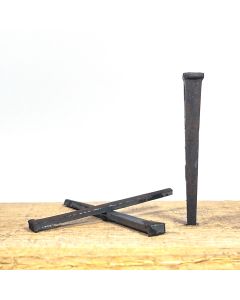 Flooring Nail-2-1/4" 7d-Hot-Dip Galvanized-50 Pound
Flooring Nails are recommended for laying tongue and groove hardwood flooring. Do not use this nail for face-nailing softwood flooring because the head is too small. Available Hardened in Standard Finish or Hot-Dip Galvanized. All our nails are made on original 19th century and early 20th century nail machines, this may lead to variation in head shape and slight differences in nail length. Tremont nails are proudly manufactured and packaged in Mansfield Massachusetts.
Blind Nailing
Nailing at a 45 degree angle from the butt-end of the board, which may be flat-surface, ship-lap, or tongue-and-groove. Nails used in this fashion usually have small heads and are not visible when the installation is completed. Also called toe-nailing, the sole purpose of nailing in this manner is functional rather then aesthetic.
Determine the nail spacing requirements for your hardwood flooring, based on the width of the floorboards. Boards 2 to 2 3/4 inches wide need one nail every 8 to 10 inches. Boards 3 to 3 3/4 inches wide require a nail every 6 to 8 inches. Boards 4 to 7 inches wide need one nail every 6 inches
Cut nails posses great durability. They are hard to pull out because the shape causes the wood fibers to push downward and wedge against the nails, greatly strengthening the holding power. Once you have used them you will prefer to use them for all of you projects.
$355.47 -
 Flooring Nail-2-1/2" 8d-Hot-Dip Galvanized-1 Pound
Flooring Nails are recommended for laying tongue and groove hardwood flooring. Do not use this nail for face-nailing softwood flooring because the head is too small. Available Hardened in Standard Finish or Hot-Dip Galvanized. All our nails are made on original 19th century and early 20th century nail machines, this may lead to variation in head shape and slight differences in nail length. Tremont nails are proudly manufactured and packaged in Mansfield Massachusetts.
Blind Nailing
Nailing at a 45 degree angle from the butt-end of the board, which may be flat-surface, ship-lap, or tongue-and-groove. Nails used in this fashion usually have small heads and are not visible when the installation is completed. Also called toe-nailing, the sole purpose of nailing in this manner is functional rather then aesthetic.
Determine the nail spacing requirements for your hardwood flooring, based on the width of the floorboards. Boards 2 to 2 3/4 inches wide need one nail every 8 to 10 inches. Boards 3 to 3 3/4 inches wide require a nail every 6 to 8 inches. Boards 4 to 7 inches wide need one nail every 6 inches
Cut nails posses great durability. They are hard to pull out because the shape causes the wood fibers to push downward and wedge against the nails, greatly strengthening the holding power. Once you have used them you will prefer to use them for all of you projects.
$14.28 -
 Flooring Nail-2-1/2" 8d-Hot-Dip Galvanized-5 Pound
Flooring Nails are recommended for laying tongue and groove hardwood flooring. Do not use this nail for face-nailing softwood flooring because the head is too small. Available Hardened in Standard Finish or Hot-Dip Galvanized. All our nails are made on original 19th century and early 20th century nail machines, this may lead to variation in head shape and slight differences in nail length. Tremont nails are proudly manufactured and packaged in Mansfield Massachusetts.
Blind Nailing
Nailing at a 45 degree angle from the butt-end of the board, which may be flat-surface, ship-lap, or tongue-and-groove. Nails used in this fashion usually have small heads and are not visible when the installation is completed. Also called toe-nailing, the sole purpose of nailing in this manner is functional rather then aesthetic.
Determine the nail spacing requirements for your hardwood flooring, based on the width of the floorboards. Boards 2 to 2 3/4 inches wide need one nail every 8 to 10 inches. Boards 3 to 3 3/4 inches wide require a nail every 6 to 8 inches. Boards 4 to 7 inches wide need one nail every 6 inches
Cut nails posses great durability. They are hard to pull out because the shape causes the wood fibers to push downward and wedge against the nails, greatly strengthening the holding power. Once you have used them you will prefer to use them for all of you projects.
$57.39 -
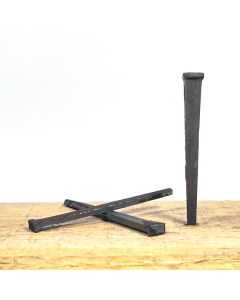 Flooring Nail-2-1/2" 8d-Hot-Dip Galvanized-50 Pound
Flooring Nails are recommended for laying tongue and groove hardwood flooring. Do not use this nail for face-nailing softwood flooring because the head is too small. Available Hardened in Standard Finish or Hot-Dip Galvanized. All our nails are made on original 19th century and early 20th century nail machines, this may lead to variation in head shape and slight differences in nail length. Tremont nails are proudly manufactured and packaged in Mansfield Massachusetts.
Blind Nailing
Nailing at a 45 degree angle from the butt-end of the board, which may be flat-surface, ship-lap, or tongue-and-groove. Nails used in this fashion usually have small heads and are not visible when the installation is completed. Also called toe-nailing, the sole purpose of nailing in this manner is functional rather then aesthetic.
Determine the nail spacing requirements for your hardwood flooring, based on the width of the floorboards. Boards 2 to 2 3/4 inches wide need one nail every 8 to 10 inches. Boards 3 to 3 3/4 inches wide require a nail every 6 to 8 inches. Boards 4 to 7 inches wide need one nail every 6 inches
Cut nails posses great durability. They are hard to pull out because the shape causes the wood fibers to push downward and wedge against the nails, greatly strengthening the holding power. Once you have used them you will prefer to use them for all of you projects.
$354.04 -
 Flooring Nail-3-1/2" 16d-Hot-Dip Galvanized-1 Pound
Flooring Nails are recommended for laying tongue and groove hardwood flooring. Do not use this nail for face-nailing softwood flooring because the head is too small. Available Hardened in Standard Finish or Hot-Dip Galvanized. All our nails are made on original 19th century and early 20th century nail machines, this may lead to variation in head shape and slight differences in nail length. Tremont nails are proudly manufactured and packaged in Mansfield Massachusetts.
Blind Nailing
Nailing at a 45 degree angle from the butt-end of the board, which may be flat-surface, ship-lap, or tongue-and-groove. Nails used in this fashion usually have small heads and are not visible when the installation is completed. Also called toe-nailing, the sole purpose of nailing in this manner is functional rather then aesthetic.
Determine the nail spacing requirements for your hardwood flooring, based on the width of the floorboards. Boards 2 to 2 3/4 inches wide need one nail every 8 to 10 inches. Boards 3 to 3 3/4 inches wide require a nail every 6 to 8 inches. Boards 4 to 7 inches wide need one nail every 6 inches
Cut nails posses great durability. They are hard to pull out because the shape causes the wood fibers to push downward and wedge against the nails, greatly strengthening the holding power. Once you have used them you will prefer to use them for all of you projects.
$14.06 -
 Flooring Nail-3-1/2" 16d-Hot-Dip Galvanized-5 Pound
Flooring Nails are recommended for laying tongue and groove hardwood flooring. Do not use this nail for face-nailing softwood flooring because the head is too small. Available Hardened in Standard Finish or Hot-Dip Galvanized. All our nails are made on original 19th century and early 20th century nail machines, this may lead to variation in head shape and slight differences in nail length. Tremont nails are proudly manufactured and packaged in Mansfield Massachusetts.
Blind Nailing
Nailing at a 45 degree angle from the butt-end of the board, which may be flat-surface, ship-lap, or tongue-and-groove. Nails used in this fashion usually have small heads and are not visible when the installation is completed. Also called toe-nailing, the sole purpose of nailing in this manner is functional rather then aesthetic.
Determine the nail spacing requirements for your hardwood flooring, based on the width of the floorboards. Boards 2 to 2 3/4 inches wide need one nail every 8 to 10 inches. Boards 3 to 3 3/4 inches wide require a nail every 6 to 8 inches. Boards 4 to 7 inches wide need one nail every 6 inches
Cut nails posses great durability. They are hard to pull out because the shape causes the wood fibers to push downward and wedge against the nails, greatly strengthening the holding power. Once you have used them you will prefer to use them for all of you projects.
$56.18